



144 Worcester St
Boston, MA
Architect / Zephyr Architects
Structural / Souza True
MEP/FP / CEC
Builder / Block Builders
Developer / J. B. Ventures
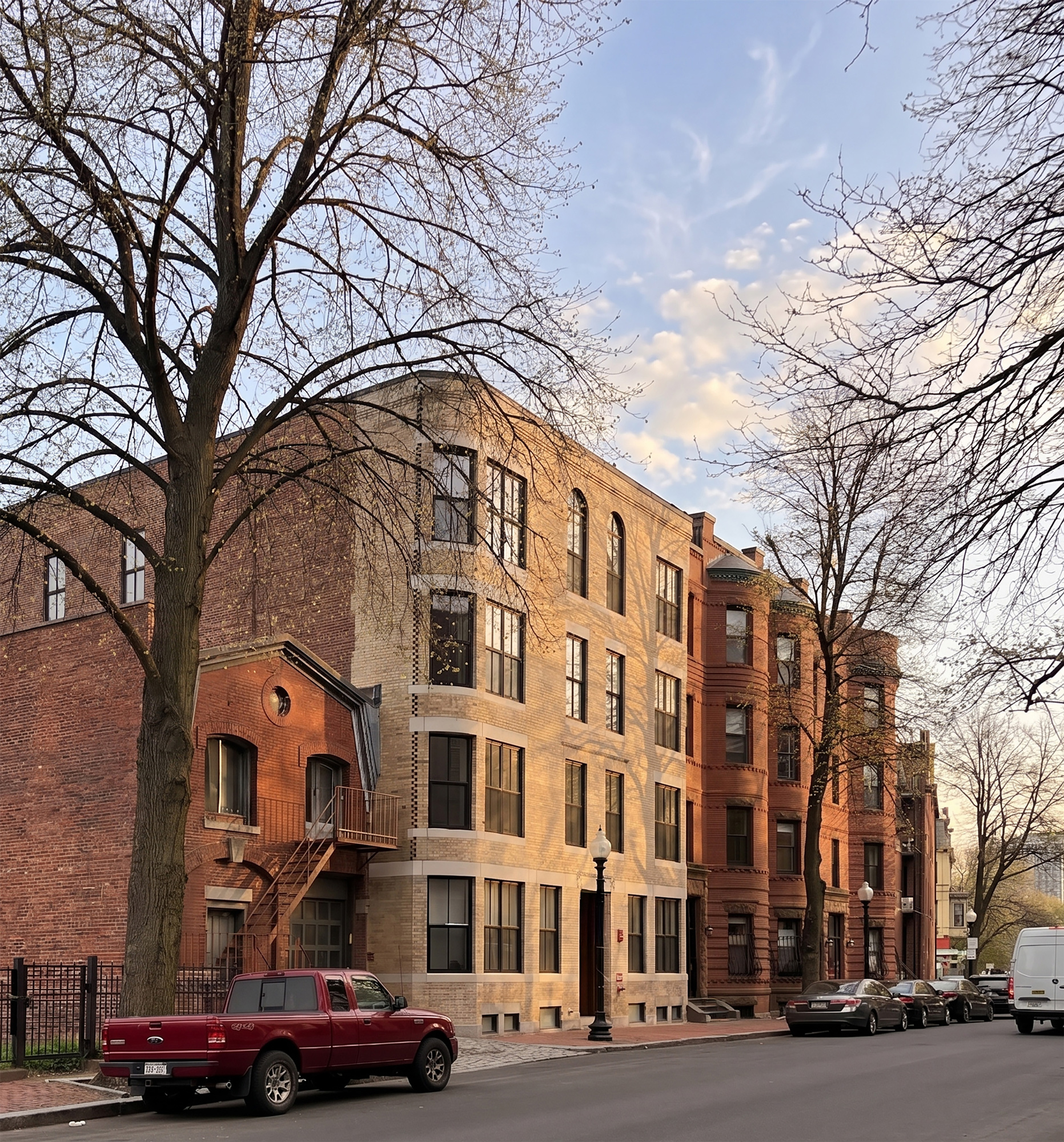
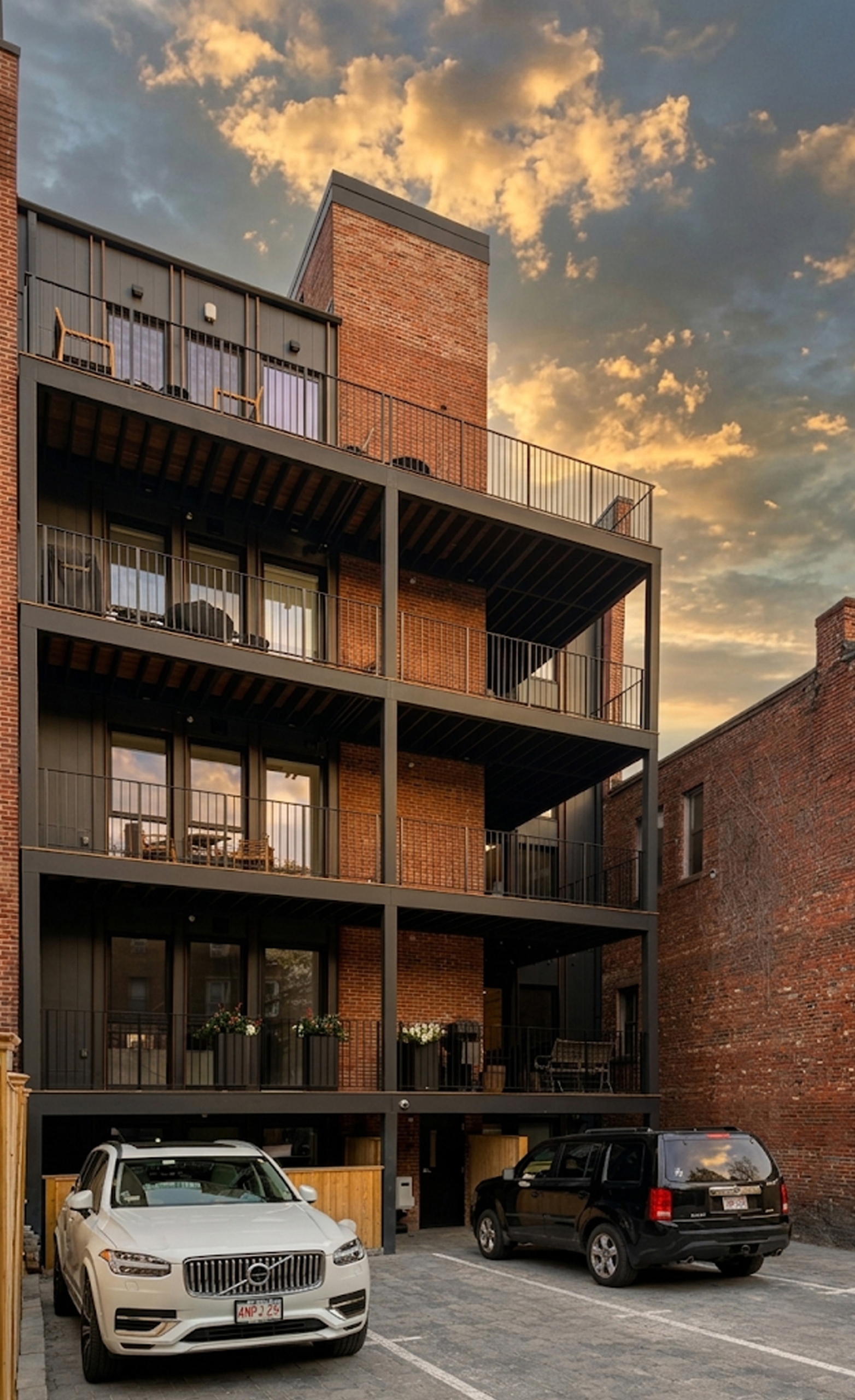
144 Worcester Street is a five-story brick rowhouse located in Boston’s South End, one of the largest intact Victorian-era neighborhoods in the United States and a designated Landmarks District. The building was constructed in 1897, a date confirmed through a scanned permit application from 1895 that documents the project’s planning phase and provides a rare record of the structure at the time of its conception.
The oldest known photograph of the building, held in the collection of the South End Historical Society, offers a valuable window into the structure’s early appearance. Notably, even in this image the building had already undergone modifications from its original configuration, underscoring how layers of change had accumulated over the building’s long history and reinforcing the significance of the present restoration effort in returning the structure closer to its original character.
The property sits on a quiet, tree-lined one-way street adjacent to the Worcester Street Community Garden, a cherished open green space that serves the surrounding neighborhood and gives the building’s south facade an unusually open and prominent exposure to the public realm. The garden’s presence makes the building’s southern elevation a meaningful feature of the streetscape, underscoring the importance of its architectural character to the community.
The building is also situated directly next to 140 Worcester Street, widely recognized as the most photographed and most-Instagrammed house in Boston. Together, the two properties anchor a block that has become emblematic of the South End’s historic character, drawing visitors, photographers, and preservationists from across the region. The condition and appearance of 144 Worcester Street is therefore inseparable from one of the most visually iconic residential streetscapes in the city.
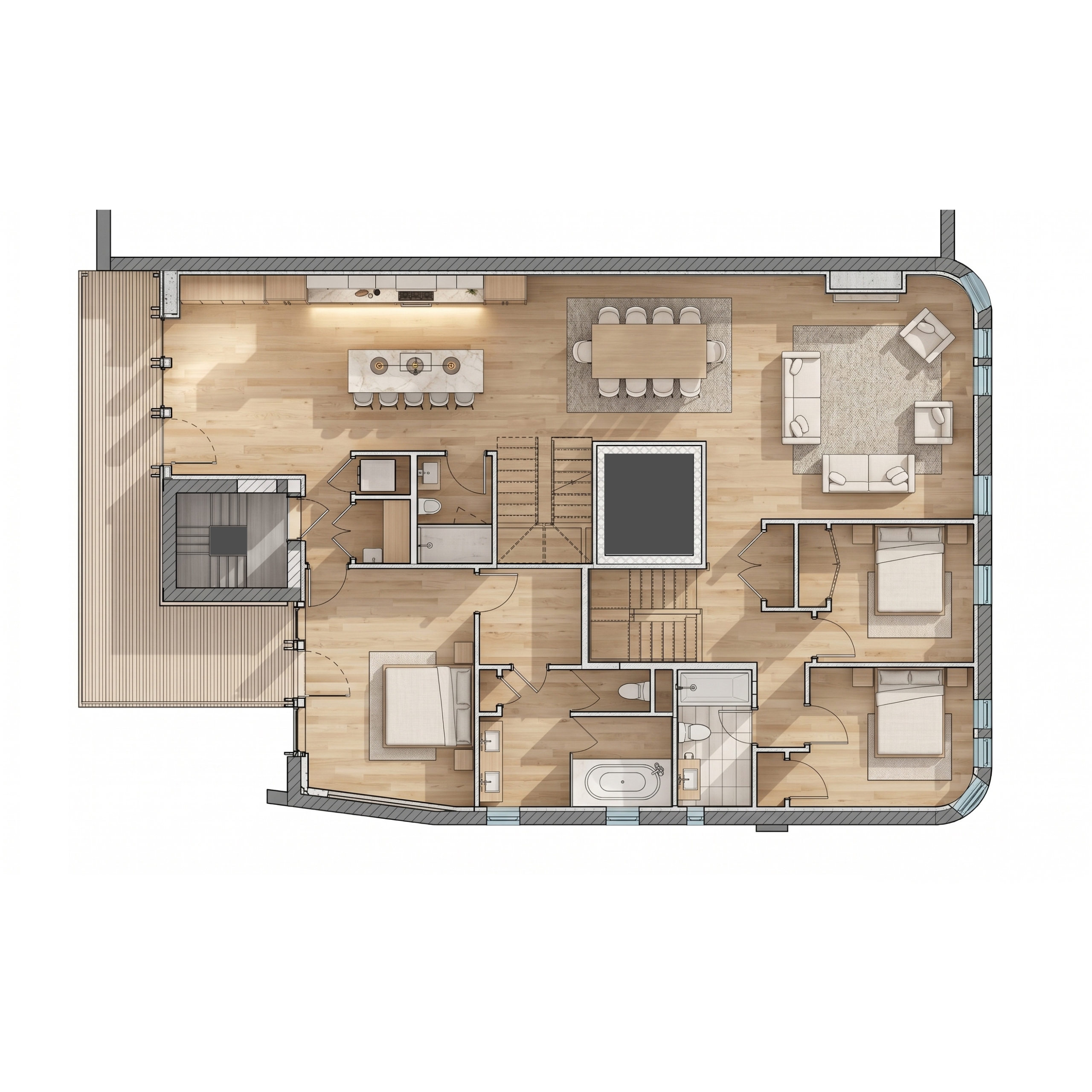
The building’s original design features include arched transom windows at the top floor and double-hung windows consistent with late 19th-century South End residential construction. Its residential layout features floor-through, double-width units in which each dwelling occupies the full depth of the building on a single level, a configuration that reflects the family-sized housing stock that once defined the South End. This unit typology has become increasingly rare as buildings are subdivided, making its preservation a meaningful contribution to the neighborhood’s housing heritage.
Over the decades, several alterations had compromised the building’s original character. A significant episode of poor-quality brickwork believed to have occurred around 1979 left the masonry in degraded condition, while replacement aluminum windows and a lowered roofline further obscured the building’s Victorian origins.
The renovation and restoration of 144 Worcester Street presented a layered set of preservation challenges that required careful historical research and creative problem-solving to resolve.
One of the most significant discoveries during the project was the identification of brick infill at the arched transom windows on the top floor. These arches, original to the 1897 construction, had been filled in at an unknown point in the building’s history, concealing a defining architectural feature. The project team committed to restoring the arched transoms, which in turn required raising the existing roof structure. Investigation revealed that the roof framing had been lowered from its original configuration, compressing ceiling heights on the top floor and blocking the transom arches entirely. By raising the roof to its historically appropriate height, the team resolved multiple problems at once: the transoms were restored, the ceiling heights corrected, and the building’s roofline returned to its original proportions.
The project also addressed the building’s window history. The existing windows were aluminum single-pane units, unoriginal replacements out of character with the South End Landmarks District. Drawing on the scanned 1895 permit application and the confirmed construction date of 1897, the project team worked with the Boston Landmarks Commission to establish that a “two-over-two” double-hung window configuration was historically appropriate for the era of construction. The selected replacement windows replicate the original grid pattern and proportions while incorporating contemporary performance standards for energy efficiency, a solution that balances historic character with modern building requirements.
The masonry restoration represented one of the most demanding and consequential aspects of the project. Previous repairs, believed to have been carried out around 1979, had introduced materials fundamentally incompatible with the building’s original brick and mortar, a mismatch that had accelerated deterioration over the decades, causing spalling, moisture infiltration, and a visually inconsistent facade that undermined the building’s historic character. The project team approached the remediation with a high standard of craft and material accuracy, carefully selecting mortar mixes and repointing techniques appropriate to the original 19th-century masonry. The goal was not simply to stabilize the facade, but to restore it to a quality consistent with the building’s original construction, work that is visible in the texture, color, and uniformity of the finished brick surfaces and that will protect the building’s fabric for generations to come.
Finally, the south parapet facing the Worcester Street Community Garden did not exist in its original configuration, as the roofline on that side had followed the lowered roof framing. As part of the roof-raising scope, the team extended the front facade parapet to continue along the south elevation, completing the building’s silhouette in a manner consistent with its original design intent. A physical mock-up was constructed and reviewed on site by Landmarks Commission staff before work proceeded, ensuring full transparency and collaboration throughout the regulatory process.